

A Nature Photographer’s Morning
The alarm clock never had time to ring. I was already awake. I got up quietly. I had prepared everything, except coffee, for the morning photography trip. I made some and poured it into a flask. Almost all my photography gear that I own was in my camera rucksack. The morning air was fresh, but fairly warm. A dry car bonnet didn’t look promising for the conditions I am hoping for, but I still set off before the fourth hour of the day began..
I drove towards Kirkkonummi, hoping to photograph deer in the morning mist and soft early light. While driving, I didn’t see much mist along the fields by the roadside. Was the air or the ground too dry? Every now and then I spotted a thick cloud of fog over some fields. I didn’t want that either.
I stopped and got my cameras ready. One body had a 70–200 mm lens, and the other a 400 mm lens with a 1.4× teleconverter. When I reached the location around 3:30, it was still twilight. The air was slightly hazy and a couple of degrees cooler than at home.
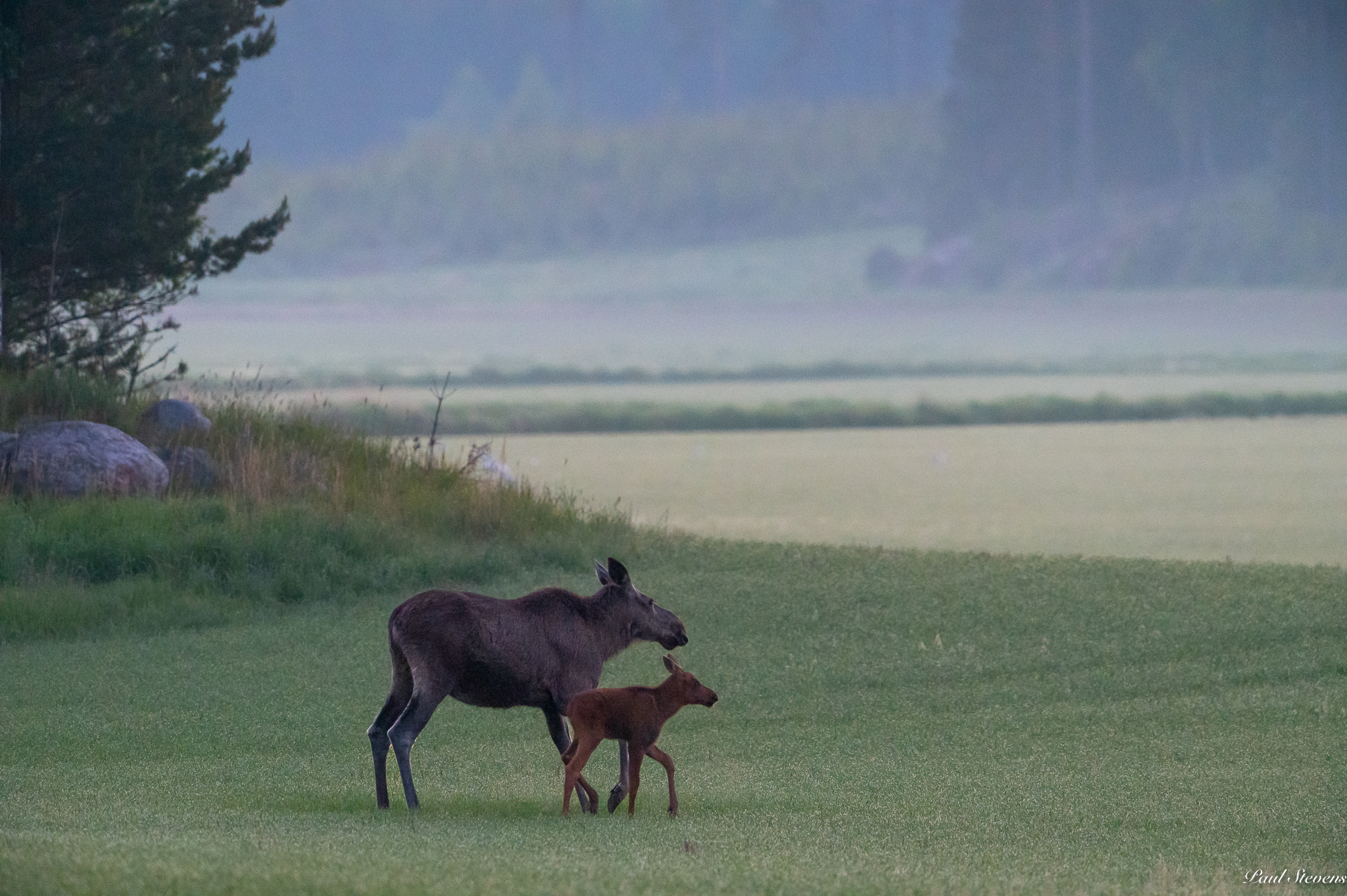
I drove slowly along a gravel road. A beautiful morning landscape opened up as I emerged from the shelter of the forest. In the field, I saw a herd of four elk. To my delight, one of them was a small, reddish-brown calf. The herd also included a medium-sized elk, which kept trying to approach the calf’s mum, but she chased it away. Was the mum of this year’s calf also its mum? The fourth moose was an adult female.
The sky above the forest and fields changed from blue to orange. Gradually the herd began to disperse. The elk cow and calf walked slowly further from my shooting position. The remining elk cow began stretching her neck to reach leaves from a tree. The one-year-old, like many teenagers, didn’t seem to know what it wanted to do. Slowly it walked away. The adult female headed into the forest to feed some more. The cow and calf remained, but they were so far away that I decided to move on.


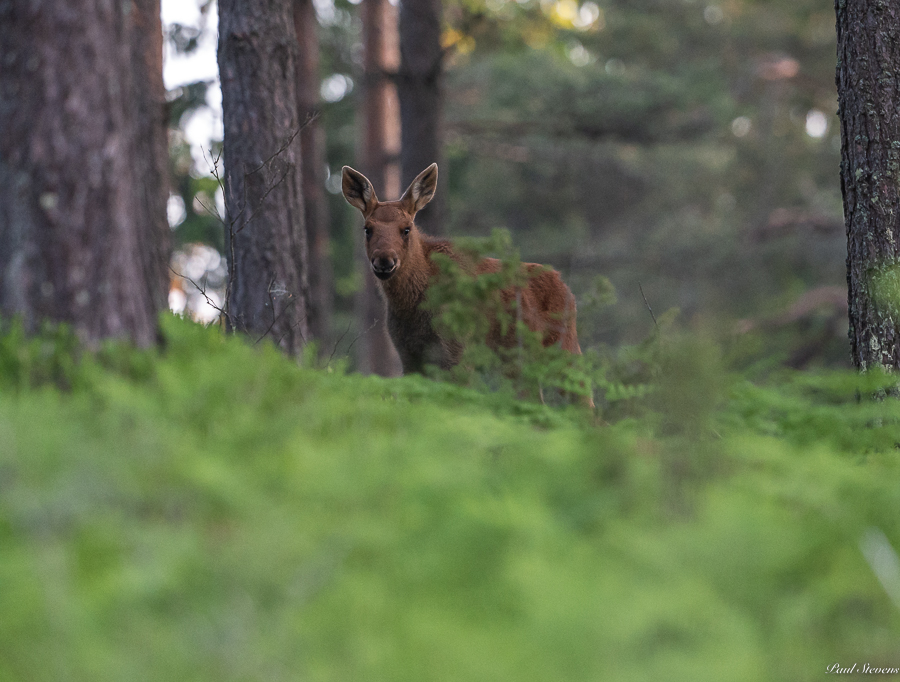
Although it was a lovely morning, I didn’t find any other animals apart from a hare in a field. It looked perfectly content in the middle of its breakfast buffet. I drove on again, but finding nothing else, I made a U-turn and drove back along the same route. A short while earlier, the sun had risen above the horizon. While photographing a pleasant, but not particularly special sunrise, I noticed a thick cloud of fog in the field to my left. I couldn’t see properly into the field, so I decided to walk along the path to find out why the fog was so dense there. I walked slowly, constantly looking ahead with my camera ready, yet I was still surprised when I suddenly found myself looking straight at an elk. I would have looked almost straight into its eyes, but the fog was so thick that I couldn’t make them out. I slowly raised the camera to my eye. Focusing was difficult in the fog, but I managed to get a few shots of the elk looking directly into the camera. After taking enough photos, I slowly backed away and the elk moved off in the opposite direction. I suspect it was the same one-year-old that had been chased away earlier.


I continued my journey by car, but I didn’t get far. On the right-hand side, at the edge of a forest opening, stood a large female elk. I stopped and took photos. She stood calmly in place, even though the distance from my car was about 20 metres. She ate leaves sporadically staying more or less in the same spot. That, of course, didn’t bother me at all. After a while, a calf appeared from the forest. That explained why the female had stayed there — she was waiting for her calf. Suddenly, a pleasant morning had turned into a wonderful one. I observed their behaviour and, of course, took photos. My presence in the car didn’t bother them, even when I changed cameras.

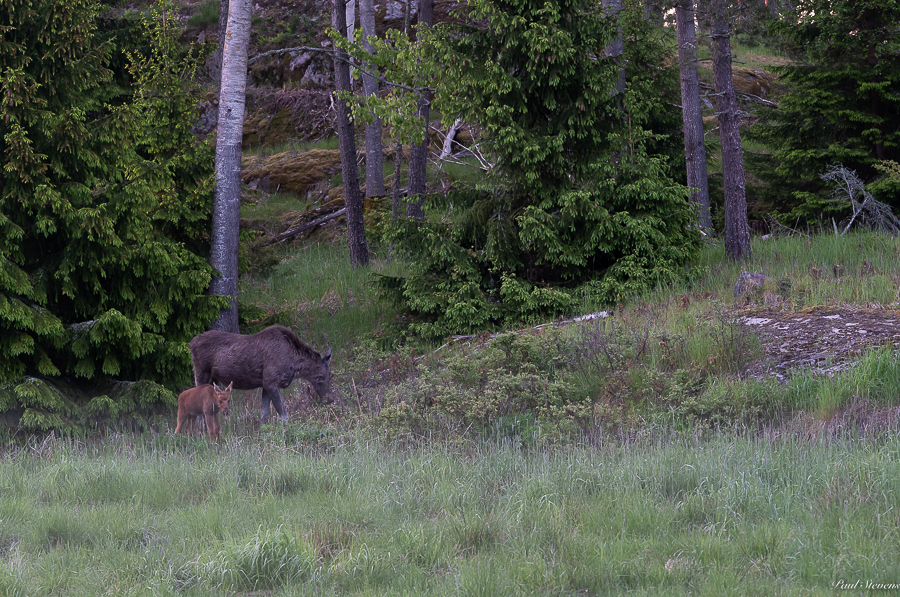
Gradually they walked towards the road and crossed it right in front of my car. At that point I noticed that my windscreen was too dirty for good photos. I settled for watching them, as they ambled calmly into the forest on the other side of the road. There they continued feeding, gradually moving deeper into the woods. According to the image data in the photos, I spent a peaceful half hour in their company. It was a wonderful encounter.

Once I had calmed down, I realised I was hungry. I started driving but again didn’t get far. By the roadside stood a magnificent white-tailed deer buck. Its antlers, covered in velvet, were growing beautifully. We looked at each other before the buck trotted off into the forest.


An hour had passed since sunrise, and it was a good time to go and eat. I didn’t go home though, but headed to the Meiko outdoor recreation area. When I reached the car park, I put on my camera rucksack and walked through the forest to the shore of Lake Meiko. Sitting down on the rocky shoreline, I was about to enjoy my sandwiches and coffee when I noticed a pair of black-throated divers diving in the lake. I took the camera out and kept it ready, hoping they would come closer. They did come a little closer, but after the next dive they were further away again. Finally, I was able to enjoy my breakfast.
After eating my sandwiches and drinking coffee, I took out the other camera with a standard zoom. While photographing landscapes, I saw a large group of divers in the middle of the lake. On the other camera, I swapped the 1.4× teleconverter for a 2× teleconverter, giving 800 mm. Through the camera, I noticed heat shimmer rising from the surface of the water as the sun shone at full strength warming the water and raising the air temperature quickly. It was only seven A.M., and Lake Meiko was quiet and peaceful. Even the campers hadn’t woken up yet.
I put my 400 mm away and attached a macro lens to one of the cameras. Slowly, I followed the path back towards the car park, constantly looking for small insects to photograph. On a bog rosemary flower, I found an impressive wasp. It had shiny green eyes and black-and-yellow legs. I tried to identify the species at home, but couldn’t get further than the family.
I also spotted many light brown butterflies, but they didn’t stay still long enough. Then I spotted one on a bilberry leaf that didn’t immediately fly away. I approached slowly and managed to take several nice photos. When I take macro photos, I usually don’t use an aperture smaller than f/11. I want to create a sense of depth and soften the background, rather than have the entire insect in sharp focus. In this case, I used f/7.1. At home, I identified the moth as a little thorn moth. It really was a beautiful one too.
I strolled back to my car at a relaxed pace, photographing flowers, mosses and lichens along the way. I didn’t find any more insects to photograph though. When I arrived home and looked at the clock, I realised I had already been awake for eight hours

